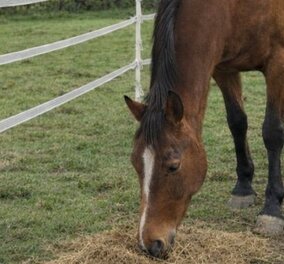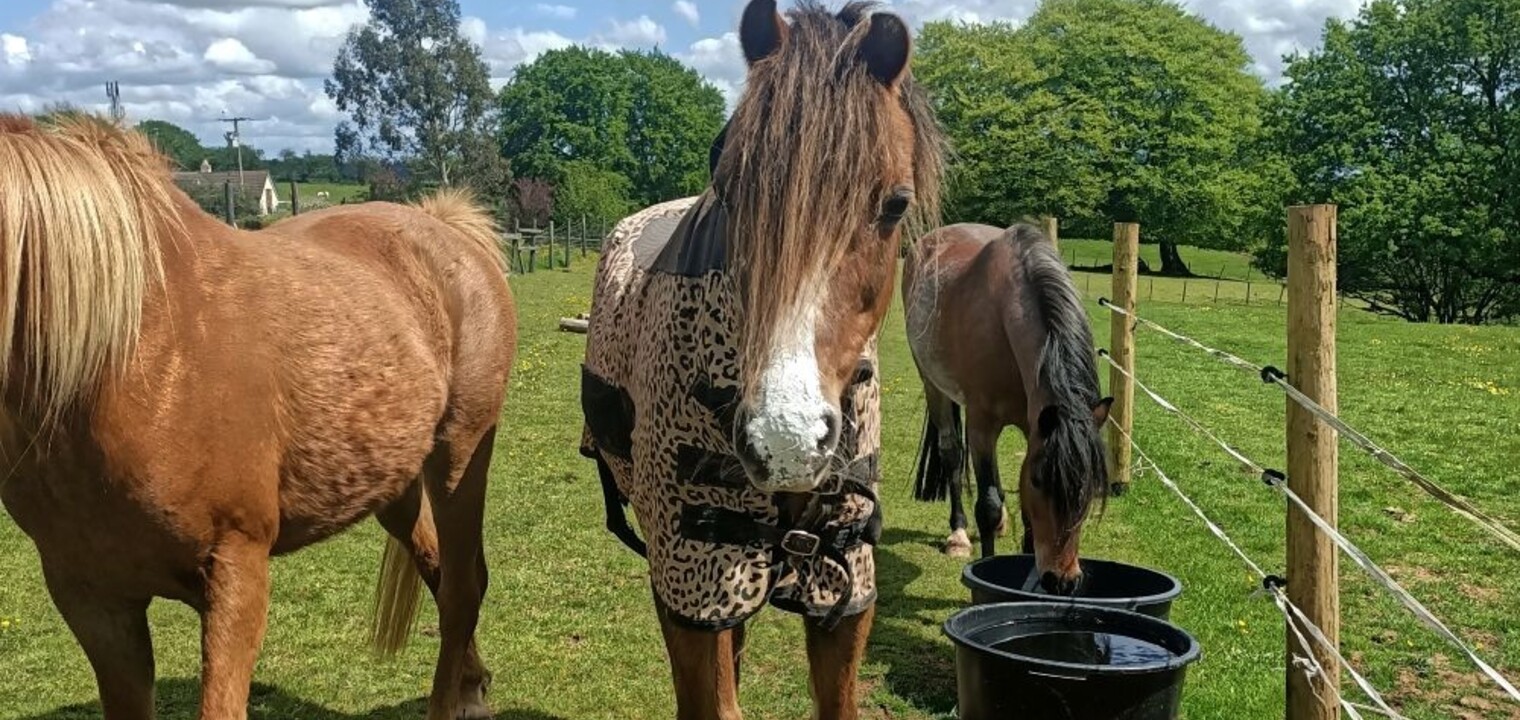
If you’re like me, you want the best for your horses. To keep them healthy, happy, and safe without spending a fortune. One of the most effective ways to do this is with a horse track system. Track systems aren’t just about exercise; they’re about creating a horse-appropriate environment that supports natural herd behaviour and helps your horses maintain a healthy weight.
As someone who has spent years working with horses in both personal and professional settings, I’ve learned that a horse track system doesn’t have to be huge, fancy, or expensive to be effective. With a little planning, you can set up a track that encourages movement, grazing, and social interaction while keeping costs under control.
Horse owners often notice that horses naturally prefer variety. They may linger in lush corners, trot eagerly along wider lanes, or follow their stablemates around the track. Using this knowledge, a well-planned track system can turn natural behaviour into healthy exercise, encouraging horses to move regularly, explore safely, and graze in rotation without constant supervision.
The concept of horse track systems was popularised by Amy Dell with her book Horse Track Systems: A How To Guide to a Healthier Horse in Body and Mind. Instead of turning horses out in square fields, a track is created around the perimeter of a paddock. Strategic placement of water, shelter, and feeding stations encourages movement, herd interaction, and natural behaviours.
How to design a Horse Track System
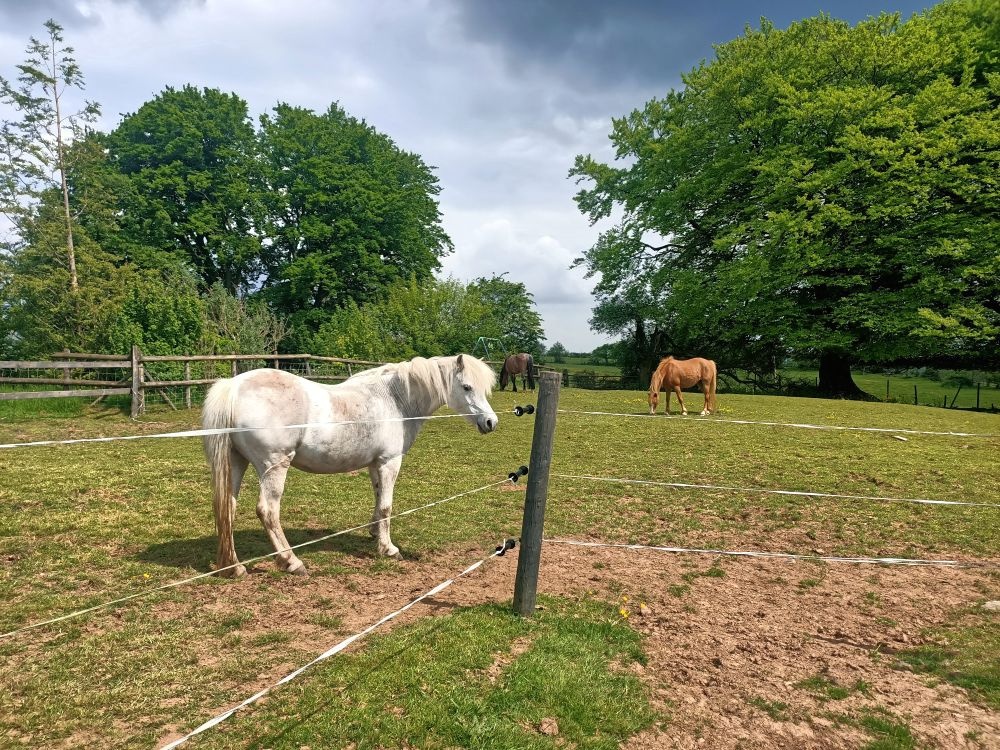
Building a track system can be simple, flexible, and cost-effective. Most horse owners start by repurposing existing fencing where possible, then extend the track with electric fencing. This allows you to experiment with width and layout before committing to permanent structures.
Track width depends on the number of horses and their size. Narrower tracks encourage movement, but too narrow can lead to conflicts over food or space. As a rule, no section should be narrower than your largest horse from nose to tail. Corners should be 10–15 metres wide and angled for easy turning for both horses and machinery.
Track width: For most horses, 2–4 metres works well for the main track, wide enough for walking and trotting side by side, but narrow enough to encourage movement. Wider lanes are ideal for high-traffic areas or “main routes” that connect multiple fields, making hay deliveries and access easier. Narrow sections can be used strategically to encourage horses to keep moving rather than snacking, particularly when connecting water or feed areas.
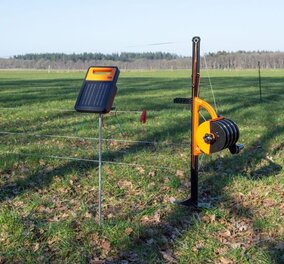
Fencing: I recommend using at least double tape with plastic posts. These are easy to move and adjust as your horses’ habits and your land layout evolve. Start simple, then refine based on your horses’ behaviour, this keeps your investment low and gives you the flexibility to adapt the track for maximum benefit. I personally prefer plastic fence posts with versatile insulators for temporary setups or when testing which track layout works best for your horses. Once you’ve figured out the ideal design, wooden posts are a strong and reliable option for your permanent fencing.
Encouraging movement: Simple tricks, like placing bales of hay in the corners or along the track, help motivate your horses to move naturally throughout the day. Horses are creatures of habit, and by offering small incentives, you can guide them to explore the track while maintaining healthy exercise patterns.
The advantages of a thoughtfully designed track system extend far beyond convenience are mostly providing regular movement. This reduces stiffness, maintains weight, and improves circulation. Horses naturally enjoy moving in a loop, which makes exercise feel less like a chore and more like a routine part of their day. Additionally track systems prevent overgrazing by rotating access and spreading out wear on the pasture. By controlling where your horses graze, you maintain better grass coverage, reduce mud in wet areas, and create a more sustainable paddock.
Also be aware of behavioural enrichment. Horses are intelligent, social animals. A track system encourages natural behaviours like walking, trotting, and exploring. And of course paddock care. Fencing is easy to adjust, grass grows evenly, and maintenance becomes much more manageable. Even without specialised surfaces, your horses will move more, and your paddocks stay healthier for longer.
How to fence off a track system
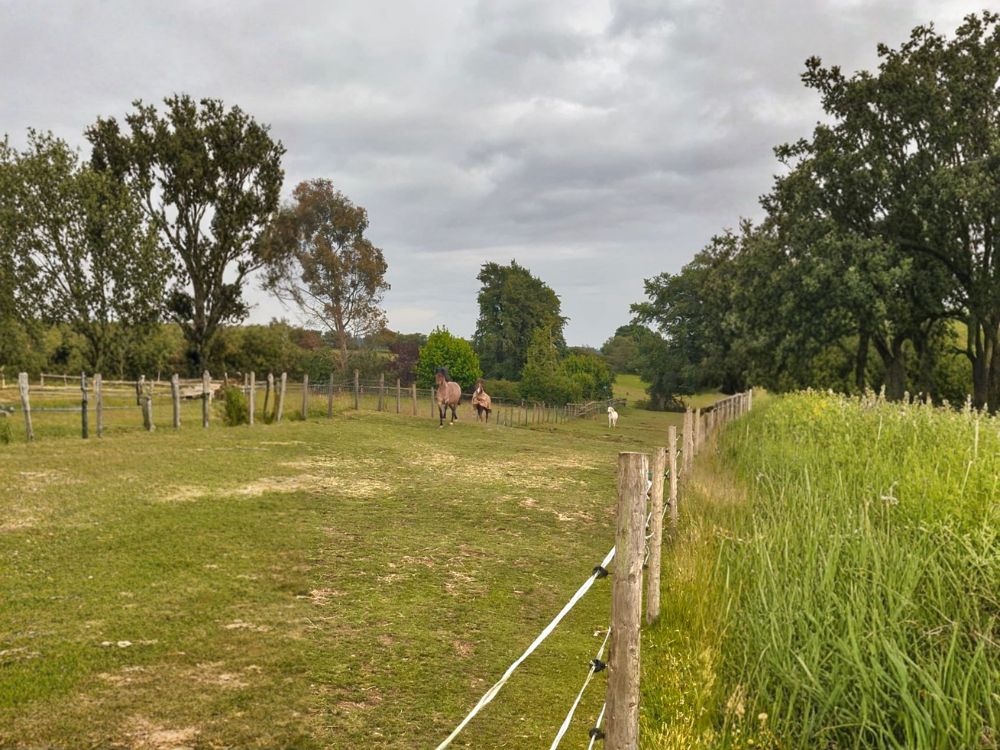
When it comes to fencing your track system, I always recommend electric tape as your first choice. Tape is highly visible to horses, which immediately makes it safer, most horses will respect it far more than thin rope or wire, especially in windy weather when it flutters gently and catches their eye. Over the years, I’ve found that visibility alone prevents so many unnecessary accidents and moments of “horse curiosity” that can quickly become expensive.
For the structure itself, as I mentioned before, plastic posts are great for the initial setup or temporary horse track systems. Additionally plastic posts are ideal for long, straight runs of track. They’re lightweight, easy to move, and perfect for trialling different widths and layouts as your horses show you how they naturally want to use the space. Corners, however, are a different story. Horses lean, graze, scratch, and occasionally test those areas, so I always secure corners with wooden posts (or optionally steel posts). Wooden posts stay firm, keep your fence line tight, and prevent the sagging that plastic posts inevitably allow when pressure is applied. For all posts options check out our horse fence posts category.
Horse fence height recommendations
Horses are naturally good jumpers, so a fence that is too low can be easily jumped. The placement of the fence ultimately determines how safe it is for your horse. For temporary or mobile fences, I recommend two rows of tape at minimum heights of 2 ft 5 in / 0.73 m and 4 ft 3 in / 1.30 m, with a maximum distance of 26 ft / 8 m between posts. For permanent fences, three rows of tape are best, at minimum heights of 2 ft 2 in / 0.65 m, 3 ft 3 in / 1.00 m, and 4 ft 5 in / 1.35 m, also with a maximum distance of 26 ft / 8 m between posts. Following these guidelines will help ensure your horses are safely contained while allowing the fence to effectively guide them along the track.
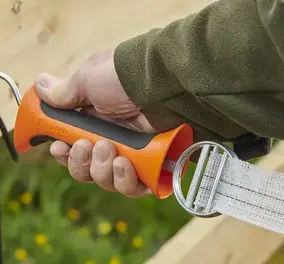
No matter what setup you choose, tape insulators are essential. Not just for safety, but for keeping your fencing tensioned properly. We offer insulators designed to release easily if a horse gets caught or panics, and I can’t stress enough how valuable this feature is. Horses don’t always make the best decisions when startled, and a clean, safe release can be the difference between a minor incident and a serious injury. I’ve seen too many preventable entanglements to go without them.
And speaking of safety, let me say this clearly: don’t let your fencing sag. A drooping fence line is just an invitation for horses to test it, step over it, or push through it. Worse still, when the tape sags, your breakaway safety points can’t function correctly because the tension isn’t there. A taut fence is a safe fence. Thus not just for keeping horses where they need to be, but for ensuring the entire track system works reliably and predictably. With careful planning and observation, your track system can evolve naturally. Watch how your horses use the track where they trot or gallop and adjust widths, fencing, and feeding points accordingly.
My Final Advice
Building a horse track system is about creating a lifestyle that works for your horses and for you. Start small, experiment, and adjust. Observe your horses’ behaviour, they’ll tell you where the track should be wider, where hay or water points work best, and how they like to move. With careful planning, a budget-friendly horse track system can provide a natural, healthy, and engaging environment. Your horses will enjoy their freedom, forage, and friends.
I also recommend checking out a guest blog from Tash Smith, she shares what worked for her when setting up her own fenced horse track system, and it’s a great insight if you’re exploring ideas.
Horse Track System FAQs
What is a horse track system?
A horse track system is a guided route around the edge of a paddock, designed to encourage regular movement, manage grazing, and reduce mud. It allows horses to exercise naturally while protecting pasture areas.
How wide should a horse track system be?
Most tracks work well at 2–4 metres wide. Wider sections are useful for high-traffic or main “lanes,” while narrower areas encourage continuous movement and grazing rotation.
How do I make a track system for horses?
Start by mapping your paddock’s edges and repurposing existing fencing where possible. Extend the track using electric tape fencing and plastic posts, and adjust widths based on your horses’ behaviour.
What are the pros and cons of a track system?
Pros: Encourages exercise, prevents overgrazing, reduces mud, improves horse fitness and behaviour, and simplifies paddock management.
Cons: Requires monitoring and occasional adjustments, fencing maintenance, and careful planning of feeding or water points.
How many tape wires should I use, and what posts are recommended?
Two tape wires with plastic posts are ideal for a flexible, easy-to-move setup that’s safe for your horses while providing effective guidance along the track. For permanent fencing, I recommend using three electric tape lines with sturdy wooden posts for a strong and long-lasting solution.
How can I inspire horses to use the track system?
Place small hay bales or feed stations along the route, vary track width for interest, and encourage movement naturally by designing paths that connect water, resting, and grazing areas.
Are there health benefits for horses?
Yes! Track systems promote regular exercise, support joint and muscle health, improve circulation, and reduce boredom or undesirable behaviours.
Can I incorporate rotational grazing or simple designs?
Absolutely. Track systems pair well with rotational grazing, allowing pasture recovery and flexible use. Designs can be simple loops or more creative layouts depending on your land and horse routines.
How much space do I need?
Surprisingly little. A smaller track is easier to manage and keeps grass under control. Winter rains may create muddy patches—especially on clay soil—but temporary surfaces can help. Even a modest paddock can support a Paddock Paradise-style track that provides plenty of movement and enrichment.

Fencing Expert at Electric fence Online & Farmer
Stephen grew up on a farm and now runs a smallholding of his own in Devon. With a genuine passion for animals and the countryside, he enjoys sharing his experience and offering support to others on their farming journey.