Guide to Keep Badgers Out
|
Electric fencing for badgers
|
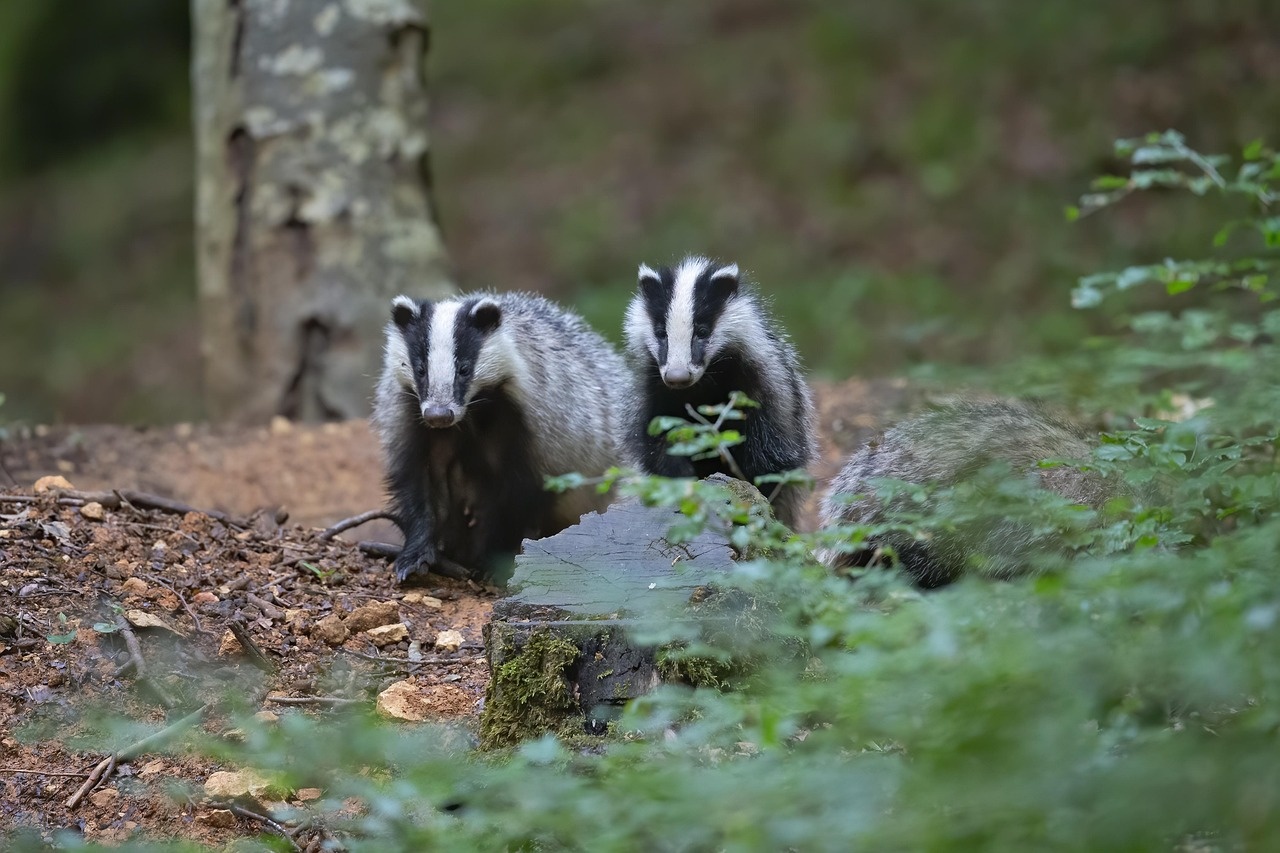
Badgers are notoriously hard to keep out of garden and fields. They are curious animals that will make use of opportunity that is available to them. Badgers are nocturnal mammals that live in social groups within elaborate underground burrows known as setts. These setts are usually found on banks, woodland edges, or hedgerows, and the animals tend to forage within a few kilometres of home. They follow regular paths between their setts and feeding areas, which means they often return to the same gardens or fields night after night. They climb and dig well, making it extra hard to discourage them from entering your garden.
Recognising signs of badger Activity
If you suspect badgers are visiting, look for clues such as conical holes in the ground, flattened paths through vegetation, or small pits containing droppings known as latrines. Claw marks on soft ground or fences and overturned turf can also confirm their presence. Recognising these early can help you act before damage becomes severe.
Reducing attractions and food sources
Most badger visits are driven by food availability. In domestic gardens, they may dig up lawns looking for insects, raid compost heaps, or help themselves to fallen fruit. On farms, they can damage crops, particularly sweetcorn or soft fruit, or disturb soil while foraging. Because badgers are strong diggers and persistent creatures, deterring them requires thoughtful planning rather than force.
Legal and ethical considerations
Because badgers are strictly protected in the UK, it is illegal to harm them or interfere with their setts. For most situations, the goal should be to deter badgers humanely and guide them to move elsewhere rather than to exclude them entirely from the landscape. Creating wildlife corridors or leaving undisturbed areas away from crops and gardens can encourage them to settle and feed elsewhere, maintaining a balance between conservation and protection of property.
For temporary or mobile badger fencing
We have created a badger kit specifically for temporary or semi-permanent fencing. This badger fencing kit contains everything required to build a 200m fence. Featuring sturdy plastic posts and polywire, it is quick and easy to install, while remaining flexible enough to adapt to a wide range of situations and site conditions.
Electric strained‑wire fences
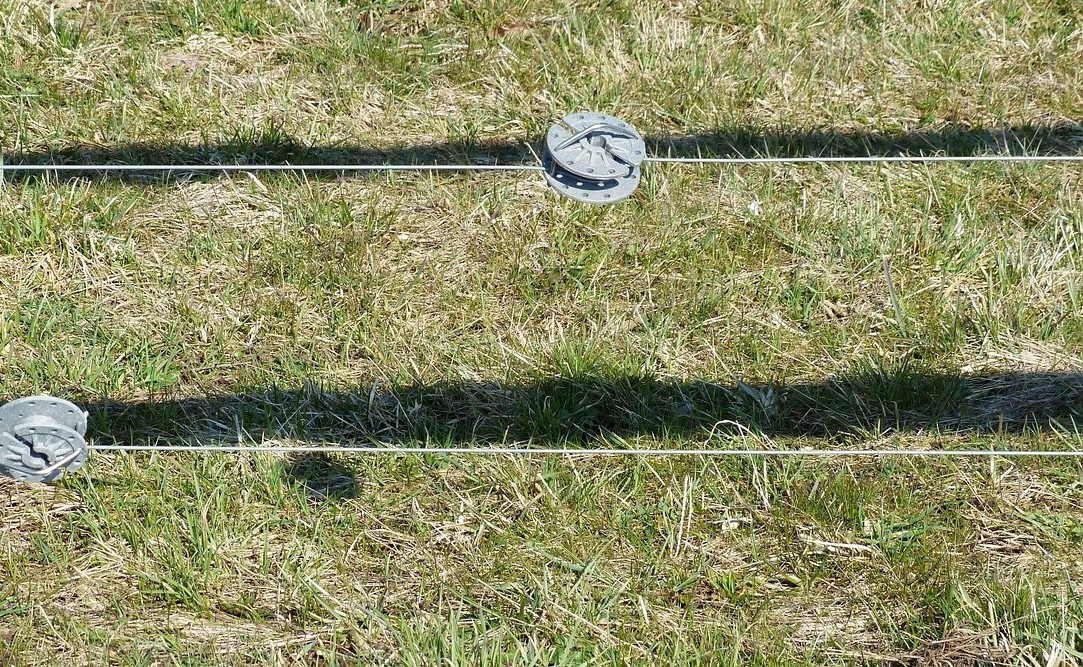
Strained‑wire fences use several straight, electrified wires running parallel to each other at different heights above the ground. The wires can be made from either polywire (plastic twine with metal strands woven in) or stranded galvanised steel wire. Polywire is cheaper to buy, but galvanised steel carries electricity much better and is more robust in the long term.
A standard strained‑wire badger fence uses four live wires positioned at 10, 15, 20 and 30 centimetres above ground level. These wires are attached to adjustable plastic insulators, which can be mounted on metal posts. Posts can usually be set up to around 7 to 10 metres apart, although uneven ground may mean they need to be closer.
Strained‑wire fencing has a few clear advantages over netting. It tends to last longer, is more flexible in how it can be set up, and typically runs at a higher voltage. It’s also kinder to other wildlife, such as hedgehogs and amphibians, which can sometimes get tangled in netting and be injured or killed as a result.
If both fence types are set up properly and regularly maintained, they work just as well as each other. However, if maintenance slips, galvanised steel strained‑wire fences usually outperform polywire and poorly maintained netting.
Electric netting
Electric netting can be an effective deterrent against badgers when installed correctly. Our Rabbit/Hobby Net and Poultry Nets are particularly suitable, as they feature closely spaced horizontal wires near the ground and dense mesh sections that help reduce gaps. For best results, the netting should be used with a sufficiently powerful high-voltage energiser designed specifically for electric netting.
It is also important to include either a buried barrier or a low live wire to discourage digging underneath. Care must be taken to ensure that the installation does not interfere with active badger setts, as badgers are protected in the UK. In some cases, where a suitable energiser is not available, a four wire electric fence system may prove more effective than netting.
Choosing an energiser
In regards to the energiser most suited for deterring badgers. Shock strength is what really teaches badgers to stay away. Badgers are well-furred and muscular, which means you need a strong pulse to penetrate. Aim for a minimum of 4–5 kilovolts (kV) on the live wires. Under 3 kV is often ineffective for badgers, especially in wet conditions or with older wires. Many of our energisers can deliver 5–8 kV, which is ideal.
You don’t need a massive one, but you do need consistent voltage and enough joules of stored energy to maintain it, even when vegetation touches the wire.
- For small gardens or short runs (under 200 m): a 0.5–1 joule energiser is fine.
- For longer fences (up to 1–2 km): choose at least 2–3 joules.
- For field-scale or multiple-strand setups: 3–5 joules or more ensures stable power.
Both mains-powered and battery/solar-powered units work but mains units are more reliable and require less maintenance if you have access to power. Solar units are good for remote areas, provided the battery and panel are sized properly.
Make sure the insulators are not positioned in a way that the badgers can use them as footholds to climb. Space them widely apart and avoid placing them directly above one another; instead, stagger their positions.
To help badgers learn to avoid the fence, wrap a small amount of peanut butter or another attractive food in aluminium foil and attach it to the wires. When a badger sniffs or touches the foil with its sensitive nose, it will receive a mild shock, quickly teaching it to stay away.
Additional tips
Additionally we would like to recommend some other harmless but potential deterrents, in combination with an electric fence. Badgers dislike surprises, and there are three effective ways to make use of this:
- Motion-activated water sprinklers: The sudden burst of water will startle them and can be a humane way to keep them from returning. Keep in mind that this may also deter other animals, including pets.
- Uncomfortable surfaces: Badgers dislike walking on uneven, spiky, or rocky ground. You can spread sharp sand, pinecones, or horticultural grit along their access routes to make the area less inviting.
- Lastly, badgers have a strong sense of smell, and scents such as citronella or garlic spray may help to discourage them. However, these should always be used alongside other deterrents, as they are rarely effective on their own.
Coexistence and prevention
Living alongside badgers is part of rural and even suburban life in much of the UK. With a combination of sturdy fencing, good waste management, and an understanding of their habits, it is possible to protect gardens and fields while respecting the animals’ place in the ecosystem. Preventing badger damage is not about removing them altogether but about making human spaces less inviting and encouraging them to forage in more natural habitats.